上等兵
- 注册时间
- 2022-9-19
- 金币
- 88 个
- 威望
- 0 个
- 荣誉
- 0 个
累计签到:3 天
连续签到:0 天
[LV.20]漫游旅程
|
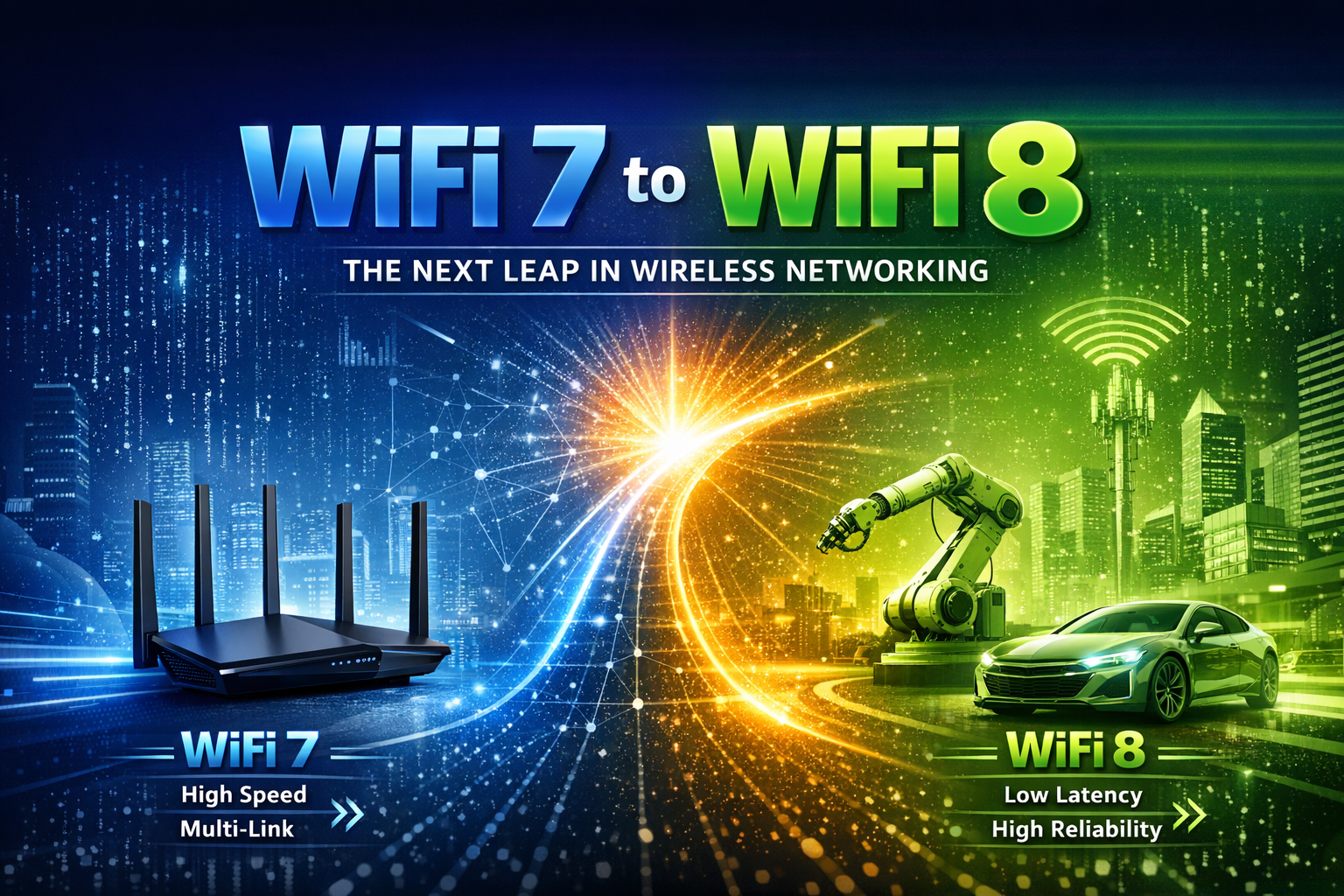
From “Faster Speeds” to “Greater Reliability” — A New Era of Wireless Networking
As wireless technology continues to evolve, WiFi 7 is rapidly being deployed worldwide, while the next-generation WiFi 8 (802.11bn) is already on the horizon.
For enterprise networks, industrial communication, and high-density environments, this shift represents not just a performance upgrade—but a transformation in network architecture.
So what are the key differences between today’s mainstream WiFi 7 solutions based on Qualcomm IPQ9574 and the future of WiFi 8?
1. WiFi 7: The Best High-Performance Choice TodayWiFi 7 solutions powered by IPQ9574 have become the standard architecture for high-end wireless deployments.
🚀 Key Advantages- Tri-band support: 2.4GHz / 5GHz / 6GHz
- Ultra-high throughput with 320MHz bandwidth
- Multi-Link Operation (MLO) for improved performance and stability
- 10GbE connectivity for enterprise-grade networking
👉 In short:
WiFi 7 = Faster, stronger, and higher throughput
2. WiFi 8: From Speed to Deterministic NetworkingUnlike WiFi 7, WiFi 8 is not just about higher speeds—it focuses on delivering consistent and reliable network performance for next-generation applications.
🔍 What WiFi 8 Will Bring:✔ Higher ReliabilityNear-wired stability for mission-critical applications
✔ Lower LatencyOptimized for real-time use cases like AR/VR and industrial control
✔ Coordinated Multi-APMultiple access points working together to reduce interference and improve user experience
✔ Intelligent NetworkingAI-driven optimization for dynamic resource allocation
👉 Core shift:
WiFi 8 = More stable, more intelligent, more reliable
3. WiFi 7 vs WiFi 8: Key DifferencesCategoryWiFi 7 (IPQ9574)WiFi 8
FocusMaximum speedStability & reliability
ExperienceHigh throughputLow latency + consistent performance
ArchitectureSingle AP optimizationMulti-AP coordination
Use CasesEnterprise / high-densityIndustrial / XR / automation
4. Application Scenarios📶 WiFi 7 (Mainstream Today)- Enterprise office networks
- Hotels, malls, high-density venues
- High-speed data and video transmission
👉 Strength: High capacity and speed
🌐 WiFi 8 (Future Direction)- Industrial automation and robotics
- XR and immersive applications
- Smart cities and connected mobility
👉 Strength: Stability, low latency, reliability
5. Which One Should You Choose?✔ Short Term (Now – 3 Years)WiFi 7 remains the optimal choice—especially solutions based on IPQ9574:
- Mature ecosystem
- Proven performance
- Widely deployed
✔ Mid to Long Term (3–5 Years)WiFi 8 will gradually enter the market and enable:
👉 A new era where wireless can truly replace wired networks
6. ConclusionThe transition from WiFi 7 to WiFi 8 marks a fundamental shift in the industry:
- From “Speed-first” → “Experience-first”
- From “Single-device performance” → “System-level coordination”
- From “Wireless access” → “Critical infrastructure”
👉 For businesses, this is not just a technology upgrade—it’s a transformation in capability.
|
|




 IP卡
IP卡 狗仔卡
狗仔卡 发表于 2026-4-20 13:06

 提升卡
提升卡 置顶卡
置顶卡 沉默卡
沉默卡 喧嚣卡
喧嚣卡 变色卡
变色卡 千斤顶
千斤顶 显身卡
显身卡